
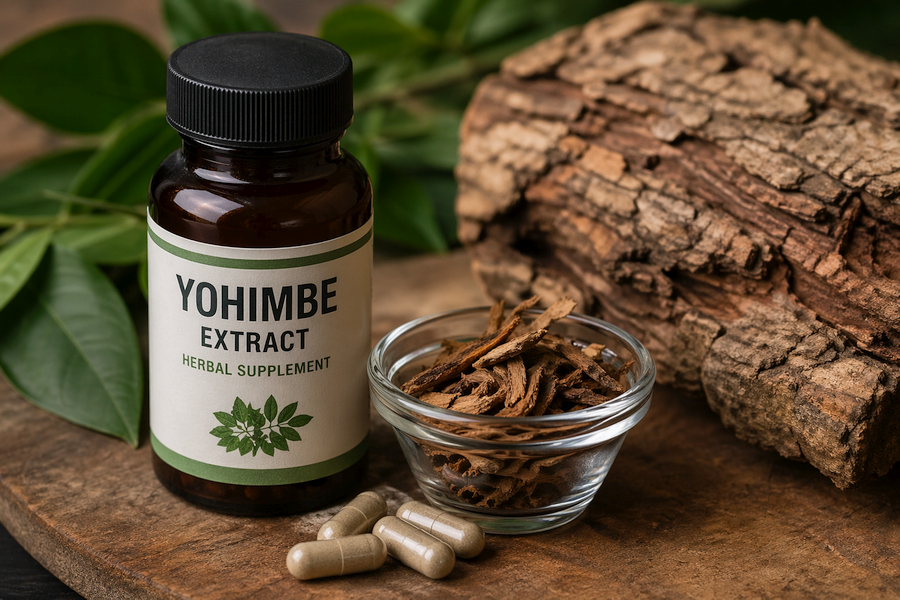
Yohimbe is a natural supplement made from the bark of an African tree. It contains an active compound called yohimbine, which may help improve blood flow and is often used for erectile dysfunction and fat loss. However, it can also cause strong side effects like anxiety, high blood pressure, and a racing heart, so it’s not a low-risk supplement.
What Is Yohimbe?
Yohimbe comes from the bark of a tree called Pausinystalia yohimbe, which grows in parts of West Africa. For a long time, it was used in traditional medicine, especially for boosting sexual performance and energy.
Today, it’s sold as a dietary supplement in capsules, powders, and extracts. The main reason people take it is because of its active ingredient, yohimbine. This compound has been studied for its effects on blood flow, fat metabolism, and sexual function.
That said, there’s a bit of a gap between traditional use and modern safety standards. Yohimbe products can vary a lot in strength, and that inconsistency matters more than most people realize.
How Yohimbe Works in the Body
Yohimbine works by blocking certain receptors in the body called alpha-2 adrenergic receptors. When these receptors are blocked, your body releases more norepinephrine, a hormone that’s linked to alertness, heart rate, and fat breakdown (1).
In simple terms, it may:
- Increase blood flow
- Stimulate the nervous system
- Promote fat burning
- Enhance sexual arousal
That combination explains why yohimbe shows up in both male enhancement supplements and fat burners. But here’s the catch – those same effects can also push the body into a stressed state, especially at higher doses.

Potential Benefits of Yohimbe
1. May Help With Erectile Dysfunction
This is probably the most well-known use of yohimbe.
Some research suggests that yohimbine may improve erectile dysfunction by increasing blood flow and stimulating nerve signals involved in arousal (2). It appears to work differently than prescription drugs like sildenafil, but the end goal is similar.
Still, results are mixed. It may help some men, especially those with mild ED, but it’s not as reliable or predictable as prescription options.
If you’re exploring natural options, you might also want to check out this guide on the best supplements for treating erectile dysfunction, which covers other alternatives.
2. May Support Fat Loss
Yohimbe is often marketed as a fat-burning supplement, especially for stubborn areas like the lower belly.
The theory is that by blocking alpha-2 receptors, yohimbine allows fat cells to release stored fat more easily (3). Some small studies suggest it may help with fat loss, particularly when combined with exercise.
But the effect seems modest at best. It’s not a magic solution, and results vary widely.
3. May Increase Energy and Focus
Because it stimulates the nervous system, yohimbe may increase energy levels and mental alertness.
Some people describe it as similar to caffeine – but stronger and sometimes less predictable. You might feel more awake and focused, but you could also feel jittery or anxious.
If you’re looking for a more balanced approach to energy, something like rhodiola rosea might feel a bit smoother for daily use.
4. May Improve Athletic Performance (Slightly)
There’s some evidence that yohimbine could help athletes by increasing adrenaline and fat use during workouts (4). In theory, that might help endurance or fat oxidation. In reality, the benefits appear small and inconsistent.
For most people, better results likely come from solid nutrition and training rather than relying on a stimulant-heavy supplement.

Side Effects and Risks
This is where things get serious. Yohimbe is not a gentle herb. It’s powerful, and that power comes with real risks.
Common Side Effects
- Anxiety or nervousness
- Increased heart rate
- High blood pressure
- Dizziness
- Headaches
- Nausea
Even at moderate doses, some people feel uncomfortable or overstimulated.
More Serious Risks
In higher doses, yohimbe may lead to:
- Panic attacks
- Irregular heartbeat
- Kidney issues
- Seizures
- Severe hypertension
There have also been reports of hospitalizations linked to yohimbe use (5). It’s not something to take lightly, especially if you already have underlying health issues.
Who Should Avoid Yohimbe?
Yohimbe isn’t for everyone. In fact, a lot of people should probably avoid it altogether.
You should not use yohimbe if you have:
- High blood pressure
- Heart disease
- Anxiety disorders
- Kidney or liver problems
It may also interact with medications, including antidepressants and stimulants.
If you’re unsure, it’s worth talking to a healthcare provider before trying it. That might sound obvious, but with supplements, people often skip that step.

Dosage: How Much Is Safe?
This is one of the trickiest parts. There’s no universally agreed “safe” dose for yohimbe bark because the concentration of yohimbine can vary a lot between products.
For pure yohimbine (the standardized compound), studies often use:
- 5–10 mg per day, sometimes split into smaller doses (6)
But with raw yohimbe bark supplements, labeling isn’t always reliable. You might think you’re taking a small dose, but it could be much higher.
That unpredictability is a big reason why some experts recommend avoiding yohimbe entirely and sticking with safer, more consistent supplements.
Yohimbe vs. Yohimbine: What’s the Difference?
This confuses a lot of people.
- Yohimbe = the raw plant extract (variable potency)
- Yohimbine = the isolated, standardized compound
Yohimbine is sometimes prescribed in controlled doses, while yohimbe supplements are less regulated. If someone is going to use this compound at all, yohimbine may be the more predictable option – but it still carries risks.
Is Yohimbe Worth It?
This is where things get a bit nuanced.
On one hand, yohimbe may offer real benefits, especially for blood flow and mild erectile issues. Some people do report noticeable effects.
On the other hand, the risk-to-reward ratio doesn’t look great. You’re dealing with:
- Strong stimulation of the nervous system
- Unpredictable supplement quality
- A higher chance of side effects than most herbal products
There are other supplements that may offer similar benefits with fewer downsides. For example:
- Ginkgo biloba – supports circulation and brain function
- Horny goat weed – often used for libido
- Damiana – traditionally used for mood and sexual health
These aren’t perfect either, but they tend to be gentler.

A Quick Personal Perspective
I’ve seen yohimbe show up in a lot of “hardcore” supplement stacks – usually for fat loss or performance. And honestly, the feedback is all over the place.
Some people swear by it. Others say it made them feel like their heart was going to jump out of their chest.
That kind of split reaction usually tells you something important: it’s not very forgiving.
Final Thoughts
Yohimbe is one of those supplements that sits in a gray area. It’s not useless. It does have real biological effects, and in certain cases, it may help with things like erectile function or fat metabolism.
But it’s also not something I’d call beginner-friendly – or even moderately safe for casual use. If you’re considering it, it might be worth asking yourself:
- Are the potential benefits worth the risks?
- Are there safer alternatives you could try first?
In many cases, the answer may lean toward caution.



Nutrition expert. Blog writer. Health enthusiast.
Read more about me…


