
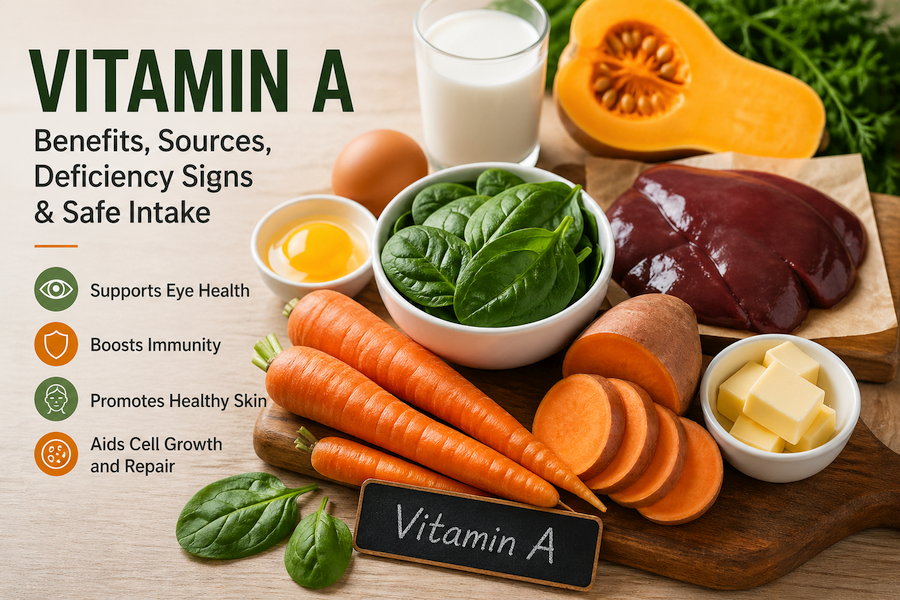
Vitamin A is an essential nutrient that supports vision, immune function, skin health, and cell growth. You can get it from foods like carrots, sweet potatoes, eggs, and liver. While it’s vital for good health, too much – especially from supplements – can be harmful, so balance matters.
Vitamin A is one of those nutrients you’ve probably heard about since childhood. Maybe someone told you carrots help you see in the dark. That idea isn’t entirely accurate, but it points to something real – Vitamin A plays a major role in your eyesight.
That said, it’s not just about vision. Vitamin A is a fat-soluble vitamin, which means your body stores it in fat tissue and the liver. This can be helpful, but it also means you don’t want to overdo it.
There are actually two main forms of Vitamin A:
- Preformed Vitamin A (retinol) – found in animal foods like liver, eggs, and dairy
- Provitamin A (beta-carotene) – found in plant foods like carrots, spinach, and sweet potatoes
Your body converts beta-carotene into active Vitamin A, though this process isn’t always super efficient.
Why Your Body Needs Vitamin A
You might think of vitamins as general “health boosters,” but Vitamin A has some very specific jobs. And honestly, some of them are more important than people realize.
1. Vision Support
This is the big one.
Vitamin A helps form rhodopsin, a pigment in your eyes that allows you to see in low light. Without enough Vitamin A, your night vision can suffer. In more severe cases, it can lead to night blindness (1).
It also helps maintain the health of your cornea – the outer layer of your eye. When that tissue breaks down, vision problems can follow.
If you’ve ever looked into eye health supplements, you’ve probably seen overlap with nutrients like lutein. If you’re curious, here’s a deeper look at how those nutrients work: Lutein Benefits, Sources, Safety and Dosage.

2. Immune System Function
Vitamin A plays a quiet but critical role in your immune system. It helps maintain the integrity of your skin and mucous membranes, which act as your body’s first line of defense.
It also appears to support the production and function of white blood cells (2). That may explain why low Vitamin A levels are sometimes linked with increased infection risk.
That said, more isn’t always better. High doses don’t necessarily “boost” immunity in a meaningful way and can even backfire.
3. Skin Health
If you’ve ever used skincare products with retinol, you’ve already encountered Vitamin A in action. Vitamin A helps regulate cell turnover, which means it encourages your skin to shed old cells and produce new ones.
This process may help improve:
- Acne
- Fine lines
- Uneven skin tone
It’s one reason Vitamin A derivatives are commonly used in dermatology. If skin health is your focus, you might also want to explore other nutrients that work alongside Vitamin A: Top 10 Vitamins and Minerals for Skin Health and Beauty.
4. Cell Growth and Development
Vitamin A plays a role in how your cells grow and differentiate. That includes everything from your skin cells to internal organs.
It’s especially important during pregnancy and early development, though this is where things get tricky. Too little Vitamin A can cause issues, but too much can be harmful to a developing fetus.
That balance matters more than people often think.

5. Antioxidant Effects (Indirectly)
While Vitamin A itself isn’t always classified as a classic antioxidant, its plant-based forms (like beta-carotene) do have antioxidant properties. Antioxidants help fight oxidative stress, which may play a role in aging and chronic disease (3).
If you want a broader look at how antioxidants work in the body, this is worth checking out: Antioxidants – What They Are and Why They Matter.
Best Food Sources of Vitamin A
Getting Vitamin A from food is usually the safest and most effective approach. Here’s a quick breakdown:
Animal Sources (Preformed Vitamin A)
- Beef liver (extremely high)
- Cod liver oil
- Eggs
- Dairy products
Plant Sources (Beta-Carotene)
- Carrots
- Sweet potatoes
- Spinach
- Kale
- Red and orange peppers
One interesting thing: foods rich in beta-carotene often have that bright orange or deep green color. Nature kind of gives you a visual clue.
Also, since Vitamin A is fat-soluble, you’ll absorb it better if you eat these foods with a little fat. Think carrots with olive oil, or spinach sautéed in butter.

How Much Vitamin A Do You Need?
Recommended daily intake varies by age and gender.
| Group | Recommended Intake (mcg RAE/day) |
|---|---|
| Adult men | 900 mcg |
| Adult women | 700 mcg |
| Pregnant women | 770 mcg |
| Breastfeeding women | 1,300 mcg |
RAE stands for Retinol Activity Equivalents, which helps account for differences between retinol and beta-carotene.
Vitamin A Deficiency: What Happens?
Deficiency isn’t super common in developed countries, but it still shows up – especially in people with poor diets or absorption issues.
Some signs include:
- Night blindness
- Dry eyes
- Frequent infections
- Dry or rough skin
In more severe cases, it can lead to serious eye damage or even blindness (4).
What’s interesting is that mild deficiency might not show obvious symptoms right away. It can quietly affect your immune system or skin before you notice anything major.

Can You Get Too Much Vitamin A?
Yes – and this is where things get a little concerning.
Since Vitamin A is stored in the body, excess intake can build up over time. This is called hypervitaminosis A.
Possible Symptoms of Too Much Vitamin A:
- Headaches
- Nausea
- Dizziness
- Joint pain
- Liver damage (in extreme cases)
Pregnant women need to be especially careful. High levels of preformed Vitamin A have been linked to birth defects (5).
It’s worth pointing out that beta-carotene from food is much safer. Your body only converts what it needs. At worst, you might turn a little orange (yes, really), but it’s generally harmless.
Supplements: Are They Necessary?
For most people, probably not. If you’re eating a balanced diet with fruits, vegetables, and some animal products, you’re likely getting enough Vitamin A already.
That said, supplements might make sense if:
- You have a diagnosed deficiency
- You have a condition that affects nutrient absorption
- Your diet is very limited
Still, it’s easy to overshoot your needs with supplements, especially if you’re taking multivitamins along with other products.
If you’re already taking other nutrients, it might be worth reviewing your stack. For example: The Top 5 Supplements Everyone Should Be Taking.

Vitamin A and Eye Health: Is It Enough on Its Own?
Vitamin A is essential for vision, but it doesn’t work alone. Other nutrients appear to play a role in maintaining eye health, like:
In fact, many eye formulas combine these nutrients rather than relying on Vitamin A alone. If you’re interested in a more complete approach, you might find this helpful: 8 Best Eye Health Supplements to Support Your Vision.
A Quick Reality Check
It’s easy to think of vitamins as simple “good vs bad” nutrients. But Vitamin A doesn’t really fit that mold.
- Too little? You may run into vision and immune issues.
- Too much? You could end up with toxicity problems.
So it’s not about loading up – it’s about staying in that middle zone where your body functions best.
And honestly, food tends to get you there more reliably than supplements.
My Take (A Bit More Personal)
If I had to sum it up, Vitamin A is one of those nutrients that quietly does a lot behind the scenes. You don’t always notice it working – until something goes wrong.
I used to think more vitamins automatically meant better health. That idea seems less convincing the more you look into it. With Vitamin A especially, the line between “helpful” and “too much” is thinner than you might expect.
So instead of chasing high doses, it probably makes more sense to focus on consistent, balanced nutrition.

Final Thoughts
Vitamin A plays a major role in your overall health, from vision to immunity to skin. Most people can get enough through diet alone, especially by including a mix of:
- Colorful vegetables
- Leafy greens
- Eggs or dairy
Supplements can help in certain cases, but they’re not something to take casually. If you keep things balanced, your body usually does the rest.
- https://ods.od.nih.gov/factsheets/VitaminA-Consumer/
- https://www.ncbi.nlm.nih.gov/books/NBK482362/
- https://www.hsph.harvard.edu/nutritionsource/vitamin-a/
- https://www.who.int/news-room/fact-sheets/detail/vitamin-a-deficiency
- https://www.mayoclinic.org/drugs-supplements-vitamin-a/art-20365945



Nutrition expert. Blog writer. Health enthusiast.
Read more about me…


