
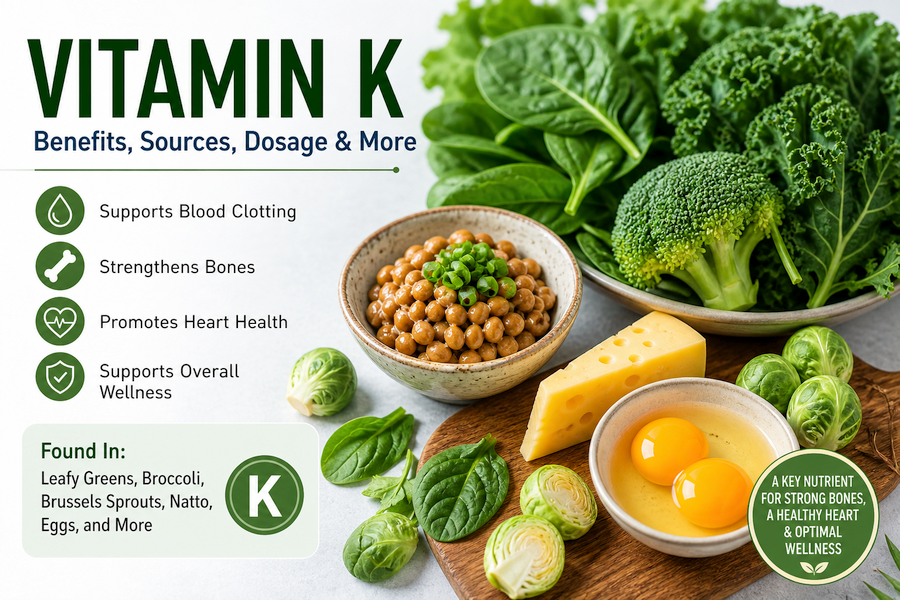
Vitamin K is a fat-soluble vitamin that plays a key role in blood clotting, bone health, and heart health. It’s found mainly in leafy greens and fermented foods, and most people can meet their needs through diet. However, some people (especially those with digestive issues or on certain medications) may need to pay closer attention to their intake.
Vitamin K doesn’t always get the spotlight like vitamin C or vitamin D. Still, it quietly does some very important work behind the scenes. Without it, your blood wouldn’t clot properly, and your bones might not stay as strong as they should.
I didn’t think much about vitamin K myself until I started looking into nutrients that support long-term health. It turns out, this vitamin may be doing more than we usually give it credit for.
Let’s break it all down in a simple, practical way.
What Is Vitamin K?
Vitamin K is a fat-soluble vitamin, which means your body absorbs it better when you eat it with fat. There are two main forms:
- Vitamin K1 (phylloquinone) – Found mostly in plant foods like leafy greens
- Vitamin K2 (menaquinone) – Found in animal products and fermented foods
K1 is the most common type in the typical diet. K2, though, may be more active in certain parts of the body, especially when it comes to bones and arteries.
Some researchers suggest that K2 might be more important than we once thought, but the science is still evolving.

Health Benefits of Vitamin K
1. Supports Blood Clotting
This is vitamin K’s most well-known role. It helps your body produce proteins that allow blood to clot properly (1).
Without enough vitamin K, even a small cut could bleed longer than normal. On the flip side, too much clotting isn’t ideal either – so your body tries to keep things balanced.
2. Helps Keep Bones Strong
Vitamin K appears to play a role in bone metabolism, which basically means it helps your body use calcium properly (2).
It activates a protein called osteocalcin, which helps bind calcium to your bones. Without enough vitamin K, calcium might not end up where it’s needed most.
This is one reason vitamin K is often mentioned alongside calcium and vitamin D. If you’re interested in bone health, you might also want to check out this guide on strong bones and joint support: 9 Best Vitamins and Supplements for Strong Bones and Joints.
3. May Support Heart Health
Here’s where things get a bit more interesting.
Vitamin K may help prevent calcium from building up in your arteries (3). That buildup, often called calcification, can make arteries stiff and less flexible.
Some studies suggest that higher vitamin K intake is linked to better heart health outcomes. That said, not all research agrees, so this is still being explored.
For a broader look at nutrients that support cardiovascular health, you might find this helpful: Best Supplements for Heart and Cardiovascular Health.

4. May Help with Brain Function
There’s some early research suggesting vitamin K might play a role in brain health (4). It appears to be involved in certain processes that support nerve cells.
Still, this area isn’t fully understood yet. It’s one of those “promising but not proven” situations.
5. Could Support Hormonal Balance
Some researchers think vitamin K may influence certain hormones, especially those related to metabolism and reproduction (5). This doesn’t mean it’s a hormone booster, exactly. But it may play a supporting role in overall balance.
Best Food Sources of Vitamin K
Getting vitamin K from food is usually the easiest (and safest) approach.
Top Sources of Vitamin K1
| Food | Vitamin K Content |
|---|---|
| Kale | Very high |
| Spinach | Very high |
| Collard greens | Very high |
| Broccoli | Moderate |
| Brussels sprouts | Moderate |
Top Sources of Vitamin K2
| Food | Vitamin K Content |
|---|---|
| Natto (fermented soy) | Extremely high |
| Cheese | Moderate |
| Egg yolks | Low to moderate |
| Chicken | Low |
| Liver | Moderate |
If you already eat a lot of greens, you’re probably getting plenty of K1. K2 can be a bit harder to get unless you eat fermented foods regularly.

Vitamin K Deficiency: Signs and Risk Factors
Vitamin K deficiency isn’t very common, but it does happen.
Possible Symptoms
- Easy bruising
- Excessive bleeding
- Frequent nosebleeds
- Blood in urine or stool
These symptoms can overlap with other conditions, so they don’t automatically mean a vitamin K problem.
Who’s at Risk?
- People with digestive disorders (like Crohn’s disease)
- Those taking certain medications (especially antibiotics or blood thinners)
- Newborn babies (they often receive vitamin K at birth)
If you’re dealing with digestive issues, it might also be worth exploring gut health topics like: Probiotics – What They Are, How They Work and What They Do.
Recommended Dosage
Vitamin K needs are actually pretty modest.
Daily Intake Guidelines
- Adult men: 120 mcg per day
- Adult women: 90 mcg per day
Most people can meet these amounts through diet alone.

Should You Take a Vitamin K Supplement?
That depends.
When Supplements Might Help
- You don’t eat many green vegetables
- You have absorption issues
- You’re at risk of bone loss
Some supplements combine vitamin K2 with vitamin D3. You’ve probably seen that combo before – it’s quite popular.
Here’s a deeper look at that pairing: Vitamin D3 + K2 – Benefits, Risks, Side Effects, and Dosage.
When to Be Careful
If you take blood thinners like warfarin, vitamin K can interfere with your medication. In that case, you should always talk to a doctor before making changes.
Vitamin K Side Effects and Safety
Vitamin K is generally considered safe when consumed from food.
Possible Concerns
- High-dose supplements may interact with medications
- Synthetic forms (like K3) are not recommended
There’s no established upper limit for natural vitamin K, but that doesn’t mean more is always better.
Vitamin K vs Other Fat-Soluble Vitamins
Vitamin K often gets grouped with vitamins A, D, and E. They all share one thing in common: they’re stored in fat.
If you’re curious about how these vitamins compare, you might want to check out:
- Vitamin A overview: Vitamin A Benefits, Sources, Deficiency and Dosage
- Vitamin E guide: Vitamin E Benefits, Daily Requirements, Food Sources & More
- Vitamin D benefits: Vitamin D Benefits, Daily Requirements, Sources and Tips
Each one plays a different role, but they often work together in subtle ways.
A Few Practical Tips
If you want to get more vitamin K naturally, here are some simple ideas:
- Add spinach or kale to smoothies
- Use olive oil on salads (helps absorption)
- Try fermented foods like natto or certain cheeses
- Don’t overcook vegetables – this can reduce nutrient content
It doesn’t have to be complicated.
Final Thoughts
Vitamin K may not be the most talked-about nutrient, but it plays a surprisingly important role in your health.
It helps your blood clot properly, supports your bones, and may even protect your heart. Most people can get enough from food, especially if they eat a balanced diet that includes leafy greens.
At the same time, it’s not a miracle vitamin. Some of the claims around it – especially for heart and brain health – are still being studied. So it’s probably best to see it as part of a bigger picture, not a standalone fix.
If you’re already eating well, you’re likely doing just fine. If not, a few small changes could go a long way.



Nutrition expert. Blog writer. Health enthusiast.
Read more about me…


